

How do metallic expansion joints perform in an offshore environment?
Aug 20, 2026
Hey there! As a supplier of metallic expansion joints, I've seen firsthand how these nifty devices play a crucial role in various environments, especially the tough offshore scene. So, let's dive into how metallic expansion joints perform in an offshore environment.
The Offshore Environment: A Tough Nut to Crack
Offshore operations are no walk in the park. The environment is harsh, with saltwater corrosion, extreme temperatures, high pressures, and strong winds. These conditions can take a toll on any equipment, and metallic expansion joints are no exception.
Saltwater is a major culprit. It's highly corrosive, and over time, it can eat away at the metal of the expansion joints. This corrosion can weaken the joints, leading to leaks and failures. Extreme temperatures are another challenge. The temperature can vary widely between day and night, and in different seasons. This thermal expansion and contraction can put stress on the expansion joints, causing them to deform or break.
High pressures are also a factor. Offshore pipelines and structures are often subjected to high internal pressures, and the expansion joints need to be able to withstand these pressures without failing. Strong winds can cause vibrations, which can also affect the performance of the expansion joints.

How Metallic Expansion Joints Hold Up
Despite these challenges, metallic expansion joints are designed to perform well in offshore environments. They are made from high-quality metals that are resistant to corrosion, such as stainless steel and nickel alloys. These metals can withstand the harsh effects of saltwater and other corrosive substances.
The design of metallic expansion joints also helps them to handle thermal expansion and contraction. They are typically made with bellows, which are flexible sections that can expand and contract to accommodate changes in temperature. This flexibility allows the joints to absorb the stress caused by thermal expansion and contraction, preventing damage to the pipeline or structure.
In terms of pressure, metallic expansion joints are engineered to withstand high pressures. They are tested to ensure that they can handle the specific pressures of the offshore application. The bellows are designed to be strong enough to resist the internal pressure, while still remaining flexible enough to allow for movement.
Types of Metallic Expansion Joints for Offshore Use
There are several types of metallic expansion joints that are commonly used in offshore environments. Let's take a look at some of them.
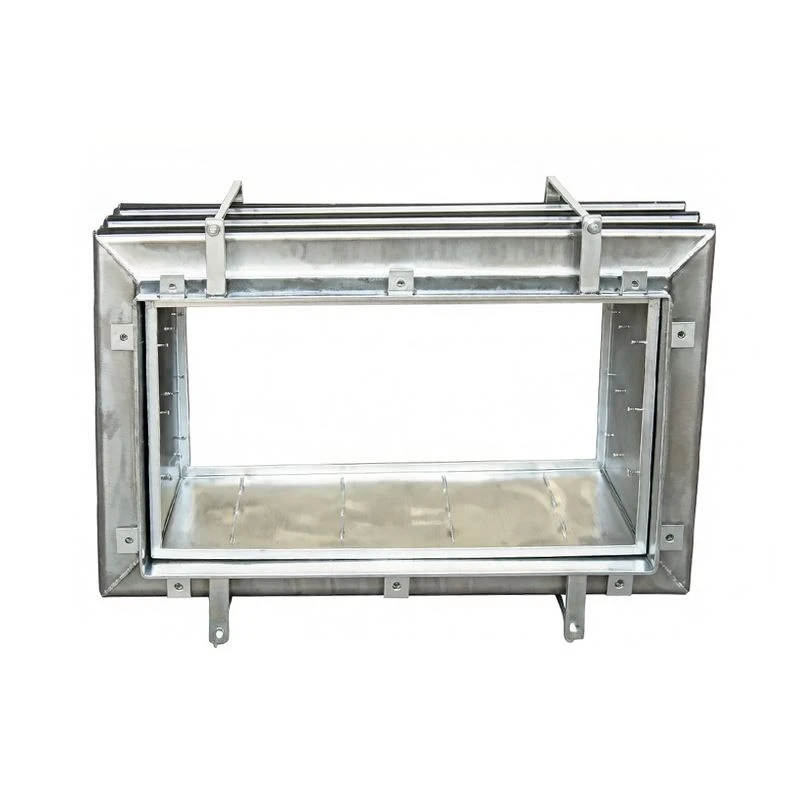
- Rectangular Bellows with Flanged Ends: These expansion joints are great for applications where space is limited. They are designed to fit into rectangular openings and are typically used in HVAC systems and other industrial applications. You can learn more about them Rectangular Bellows with Flanged Ends.
- Universal Expansion Joint: This type of expansion joint can handle movement in multiple directions. It's ideal for applications where there is a lot of movement and flexibility required. Check out Universal Expansion Joint for more details.
- Rectangular Expansion Joint: Similar to the rectangular bellows with flanged ends, but with a different design. It's also used in applications where space is a concern. You can find more information about Rectangular Expansion Joint.
- Double Axial Bellows Expansion Joint: This joint is designed to handle axial movement, which is movement in a straight line. It's often used in pipelines and other applications where there is a lot of axial expansion and contraction. Learn more about Double Axial Bellows Expansion Joint.
- Bellows Tube Blank: This is a basic component that can be used to make different types of expansion joints. It's a versatile option that can be customized to meet the specific needs of an offshore application. Check out Bellows Tube Blank for more.
Maintenance and Inspection
To ensure that metallic expansion joints perform well in an offshore environment, regular maintenance and inspection are essential. This includes checking for signs of corrosion, wear, and damage. Any issues should be addressed immediately to prevent further problems.
Inspection should be done by trained professionals who have experience with metallic expansion joints. They can use specialized tools and techniques to check the condition of the joints and identify any potential issues. Maintenance may include cleaning the joints, applying protective coatings, and replacing any damaged parts.
Why Choose Our Metallic Expansion Joints
As a supplier of metallic expansion joints, we take pride in offering high-quality products that are designed to perform well in offshore environments. Our joints are made from the best materials and are engineered to meet the specific needs of our customers.
We have a team of experts who can help you choose the right expansion joint for your offshore application. We can also provide installation and maintenance services to ensure that your joints are working properly.
If you're in the market for metallic expansion joints for your offshore project, don't hesitate to get in touch. We'd love to discuss your needs and find the perfect solution for you.
Conclusion
Metallic expansion joints are an important part of offshore operations. They are designed to handle the harsh conditions of the offshore environment, including saltwater corrosion, extreme temperatures, high pressures, and strong winds. By choosing the right type of expansion joint and performing regular maintenance and inspection, you can ensure that your joints perform well and last for a long time.
If you have any questions or need more information about our metallic expansion joints, feel free to reach out. We're here to help you make the best decision for your offshore project.
References
- "Handbook of Expansion Joints" by T. E. Nettleship
- "Design and Application of Metallic Bellows Expansion Joints" by EJMA